RESEARCH
Theory inspires experiment. Experiment challenges theory, or vice versa.
We are a group of materials designers studying the mechanical behavior of materials in complex environments. Our research focuses on conditions such as extreme temperatures, complex stress states, and fatigue loading in critical applications including aerospace, energy systems, biomedical implants, and other advanced technologies. We design materials including multi-material systems, high entropy alloys, polymers, composites, and lightweight metamaterials, with a strong emphasis on creating strong, sustainable, lightweight, and damage tolerant structures.
We work closely with advanced manufacturing, develop instruments for in situ materials characterization, and strengthen the theoretical foundations of materials design. We are currently building the world’s brightest microfocus labscale X-ray beamline, enabling new insights into material behavior across scales and driving innovations in materials engineering.
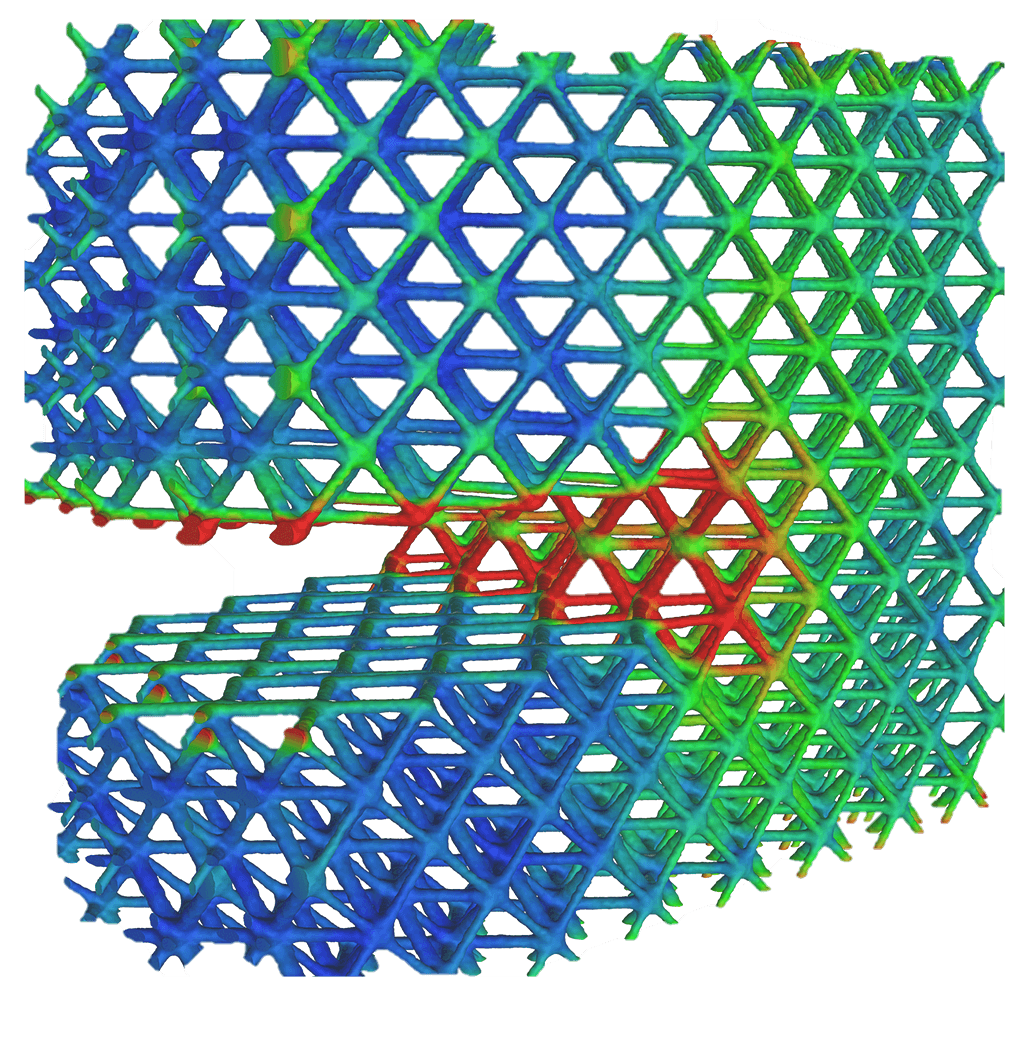
Ripstop gyroids
Ripstop is a woven fabric used in textiles, such as stockings, where stronger yarns are introduced at regular intervals into a thinner, weaker cloth to provide reinforcement. A similar effect can be observed in gyroid structures: when two interpenetrating gyroids are merged into a single geometry, they create stronger reinforcements at regular intervals. These reinforced regions can arrest crack propagation, acting much like the tougher yarns in ripstop fabric.


Architected heat exchangers
With AI hardware driving high compute costs from modern data centers spanning hundreds of acres to local computation clusters. At the core is GPUs sitting on a motherboard generating heat that can reach temperatures of 100°C and therefore demands efficient heat dissipation. We are developing additively manufactured, architected heat exchangers/heat pipes to potentially reduce size and increase efficiency. The project at material design for heat transfer application reducing energy demand in the ML/AI era, and the foundations of thermo- and fluid dynamics. Once optimized, these structures will also have applications in cooling, electronics, and consumer industries.
Local stress-strain measurements in metals
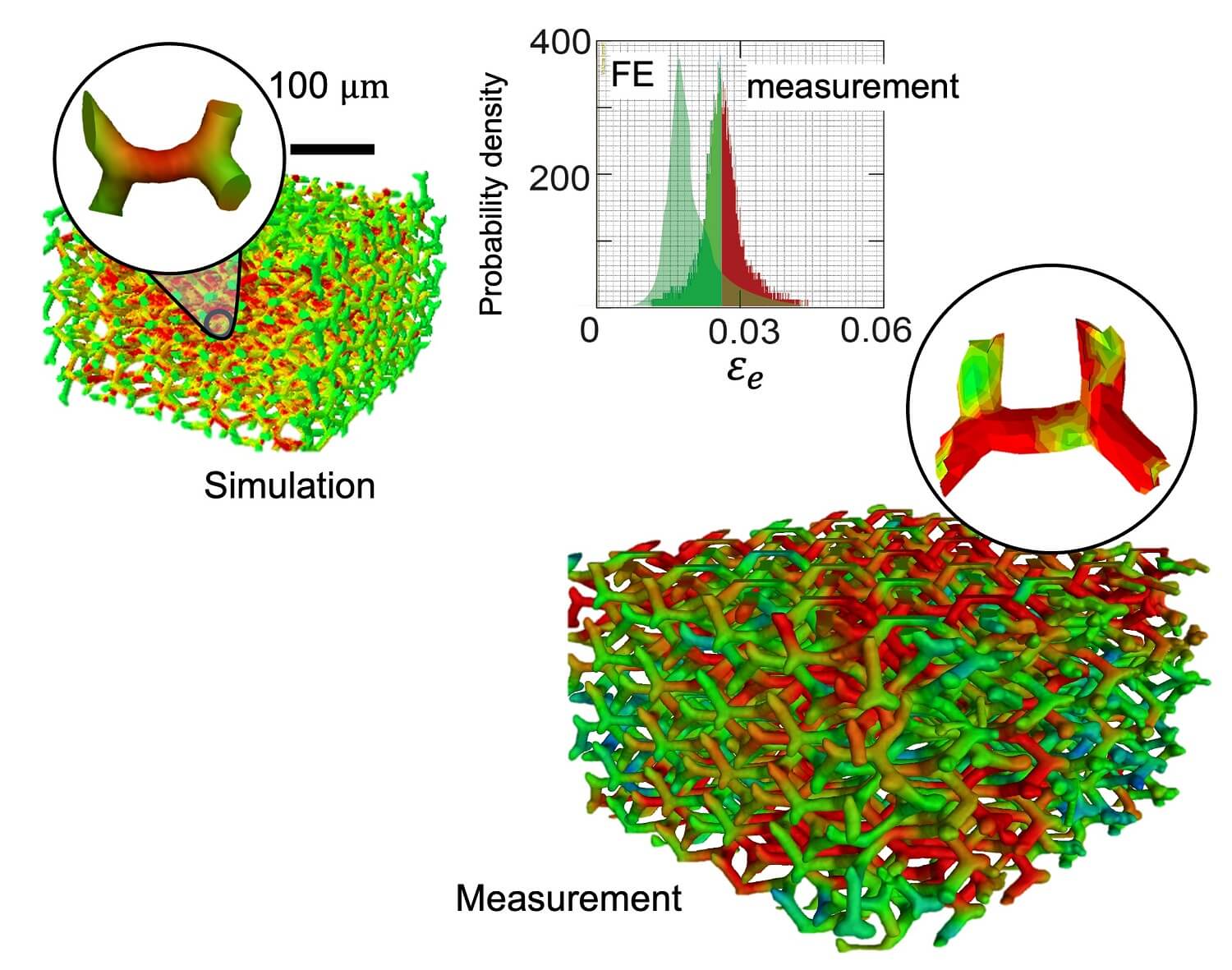
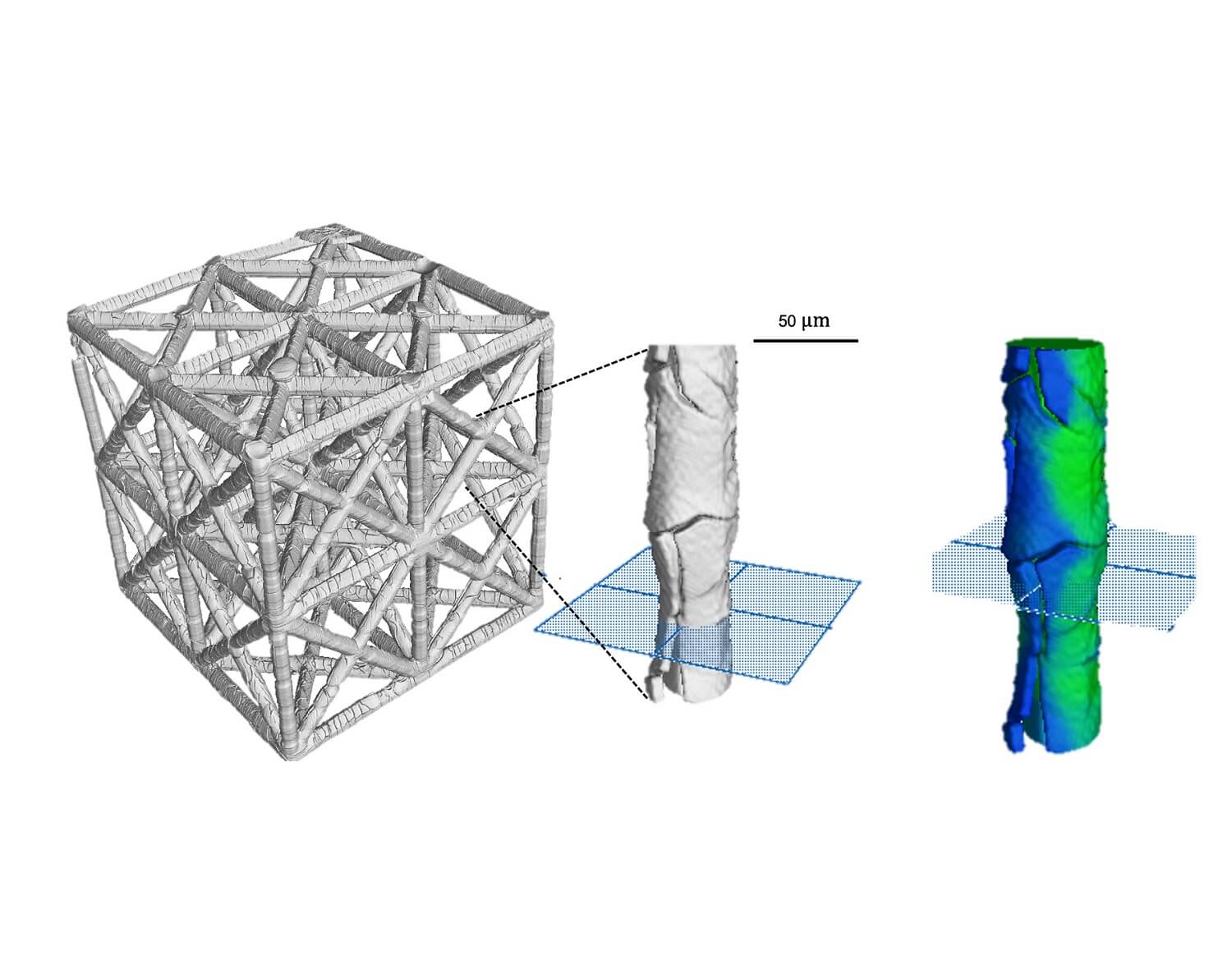
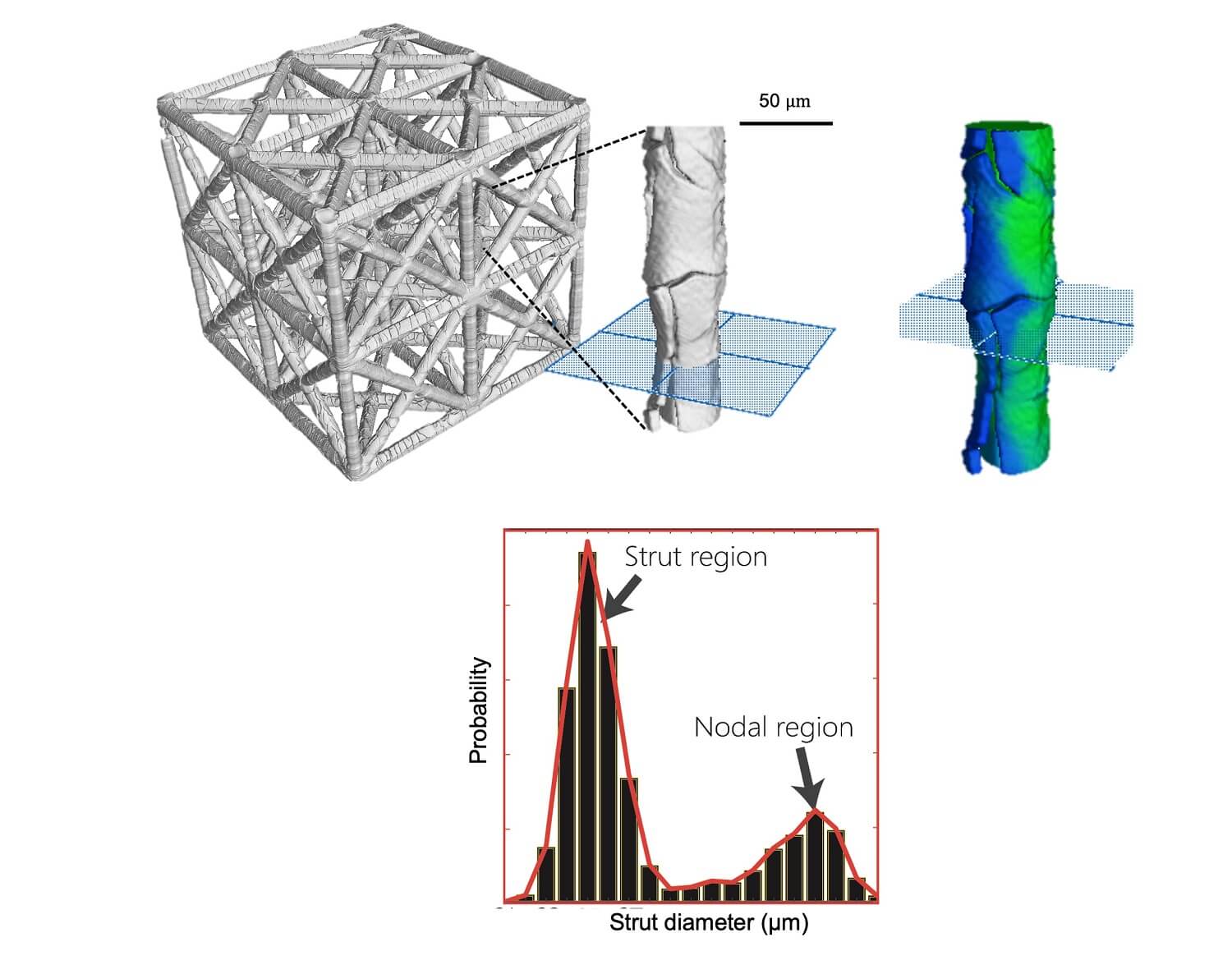
Additive manufacturing may be viewed as a type of microwelding, where metal powders are fused to create large structures. A key feature of this process is material properties can vary locally within a component. Traditional mechanical tests like tension, compression, and bending, reveal the macroscopic response of homogeneous materials. In contrast, additively manufactured structures can be inherently heterogeneous. To bridge this gap, we use a home-built apparatus that integrates X-ray scattering and optical imaging to measure local stress-strain behavior. This approach enables both the design of materials with spatially varying properties and the study of fundamental mechanisms of metal plasticity (measurement of elastic strain as a history variable).
Simmons wagon
Edward Simmons, a Caltech alumnus and co-inventor of the strain gauge, helped pioneer a tool now widely used from research labs to spacecraft. In metals, total strain consists of elastic and plastic components, and traditional strain gauges measure only the total surface strain. We developed an apparatus that measures all strain components in 2D. Stereo optical imaging (digital image correlation, DIC) captures the total strain field, while a custom circular cradle (we call it elasto-plastic diffractometer) enables measurement of elastic strain components using X-ray diffraction. From these measurements, the local plastic strain within the material can be inferred, as well as local stress-strain responses.
In tribute to Edward Simmons and inspired by the wagon he lived in later in life we informally named the instrument the Simmons Wagon. The name also suits the instrument form: a wheeled cabinet originally built as a temporary experimental setup.